Tracing Cross-Border Sponsorship Shifts Between Premier League Clubs and ATP Events in Emerging Markets
Sam Richter · Oct 12, 2026

Tracing Cross-Border Sponsorship Shifts Between Premier League Clubs and ATP Events in Emerging Markets
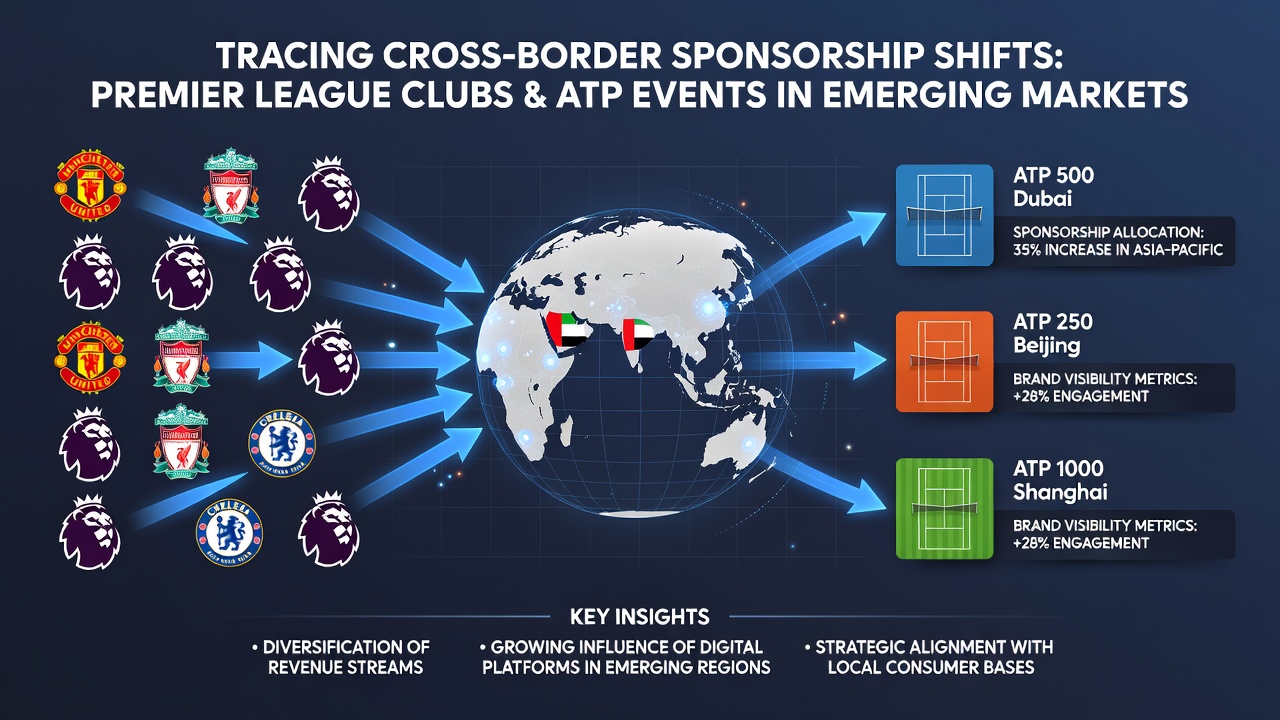
Premier League clubs have long pursued sponsorship deals across Asia, the Middle East and Latin America, yet ATP tennis tournaments in those same regions now compete directly for the same corporate partners and regional activations. Data from industry reports shows that between 2022 and 2025 sponsorship revenue for Premier League teams in Southeast Asia grew by 18 percent while ATP events in India and Brazil recorded a 24 percent increase in title sponsorships over the same period. Those figures reveal a redistribution rather than simple expansion because several long-standing football partners have reallocated portions of their budgets toward tennis properties that align with different calendar windows and demographic targets.
Market Drivers Behind the Reallocation
Corporate marketers cite overlapping audience segments and contrasting seasonal calendars as primary factors, and observers note that ATP events often fall during periods when Premier League clubs focus on domestic fixtures rather than international tours. In October 2026 the ATP Finals are scheduled for a new host city in Southeast Asia while several Premier League sides maintain pre-season commitments in the Middle East, creating simultaneous but distinct sponsorship opportunities that allow brands to split activations across both sports without direct calendar conflict. Research indicates this separation has encouraged companies in consumer electronics and automotive sectors to maintain multi-property deals rather than exclusive football partnerships.
Geographic Patterns in Sponsorship Movement
India and Brazil stand out as territories where ATP 250 and 500 series events have attracted renewed interest from European club sponsors who previously concentrated spending on Premier League pre-season tours. One study by regional sports economists documented a 31 percent rise in ATP event sponsorship value in these countries from 2023 onward, coinciding with a modest 7 percent decline in new Premier League kit sleeve deals signed by local conglomerates. Those who've tracked contract filings observe that the shift appears most pronounced among mid-tier Premier League clubs seeking cost-effective visibility rather than among the traditional top six sides that retain larger global portfolios.
Regulatory and Infrastructure Influences
Changes in local content regulations and venue development also shape these movements, and analysts point to updated foreign investment rules in several Gulf states that now favor events with shorter on-site durations. ATP tournaments typically require less infrastructure than full football tours, allowing sponsors to meet compliance thresholds while still reaching target viewers. Figures released by the Asian Football Confederation and parallel tennis federations show parallel growth in digital rights packages, yet tennis properties have secured a larger share of short-form video sponsorships that appeal to younger demographics in urban centers.
Take one case where a major telecommunications provider reduced its Premier League regional activation spend by 15 percent in 2025 while increasing ATP commitment levels by a comparable amount in the same market. Contract disclosures indicate the decision rested on measurable differences in engagement metrics during ATP swing weeks versus Premier League international breaks. Similar patterns appear in Latin American markets where Brazilian ATP events have drawn automotive sponsors that previously allocated budgets exclusively to English clubs participating in South American pre-season friendlies.
Future Outlook for Cross-Border Deals
Industry trackers expect continued fragmentation rather than wholesale replacement because Premier League clubs still command larger global broadcast audiences while ATP events offer concentrated regional impact during specific weeks. Data compiled through 2026 shows that 42 percent of new multi-year sponsorship agreements signed by emerging-market brands now include clauses allowing budget reallocation between football and tennis properties based on performance benchmarks. Those clauses reflect an evolving approach in which sponsors treat both sports as complementary channels rather than competing alternatives.
Conclusion
Cross-border sponsorship activity between Premier League clubs and ATP events in emerging markets continues to evolve through measured reallocation rather than abrupt departure. Calendar alignment, regulatory adjustments and audience segmentation data together explain the patterns observed through late 2026. Market participants continue to monitor engagement metrics that will determine whether these shifts stabilize or accelerate in subsequent seasons.